Clinical diagrams
The five pictures that resolve the most confusion.
Sequences, timelines and decision trees — the content that is far easier to recall visually than in prose.
Infection Control
PPE Donning & Doffing Sequence
Gown, mask, goggles, gloves going on. Gloves, goggles, gown, mask coming off — mask last, and never by the front.
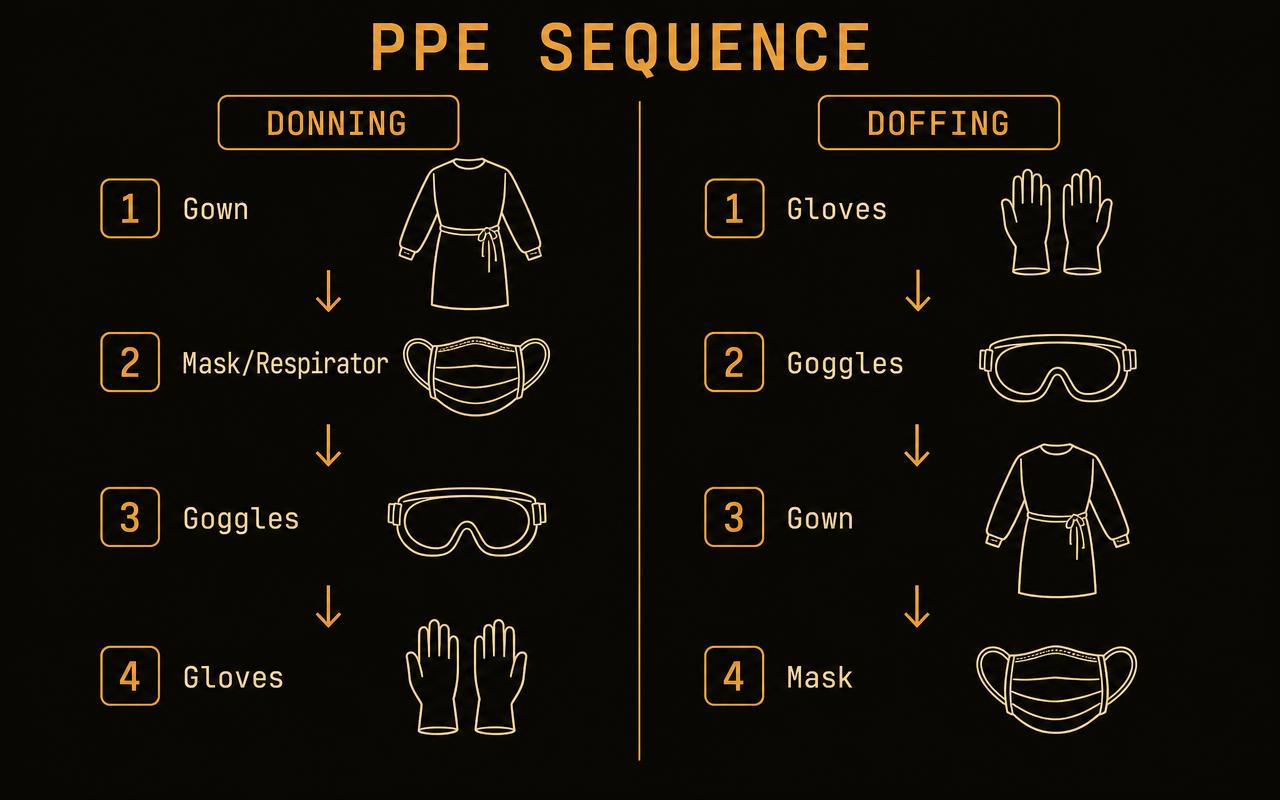
- Gloves come off first because they are the most contaminated surface
- Handle goggles by the headband, the gown by the inside
- Remove an N95 outside the room with the door closed
Adult Health
Cardiac Conduction & the ECG Waveform
SA node to Purkinje fibers, mapped onto the P wave, QRS complex and T wave.
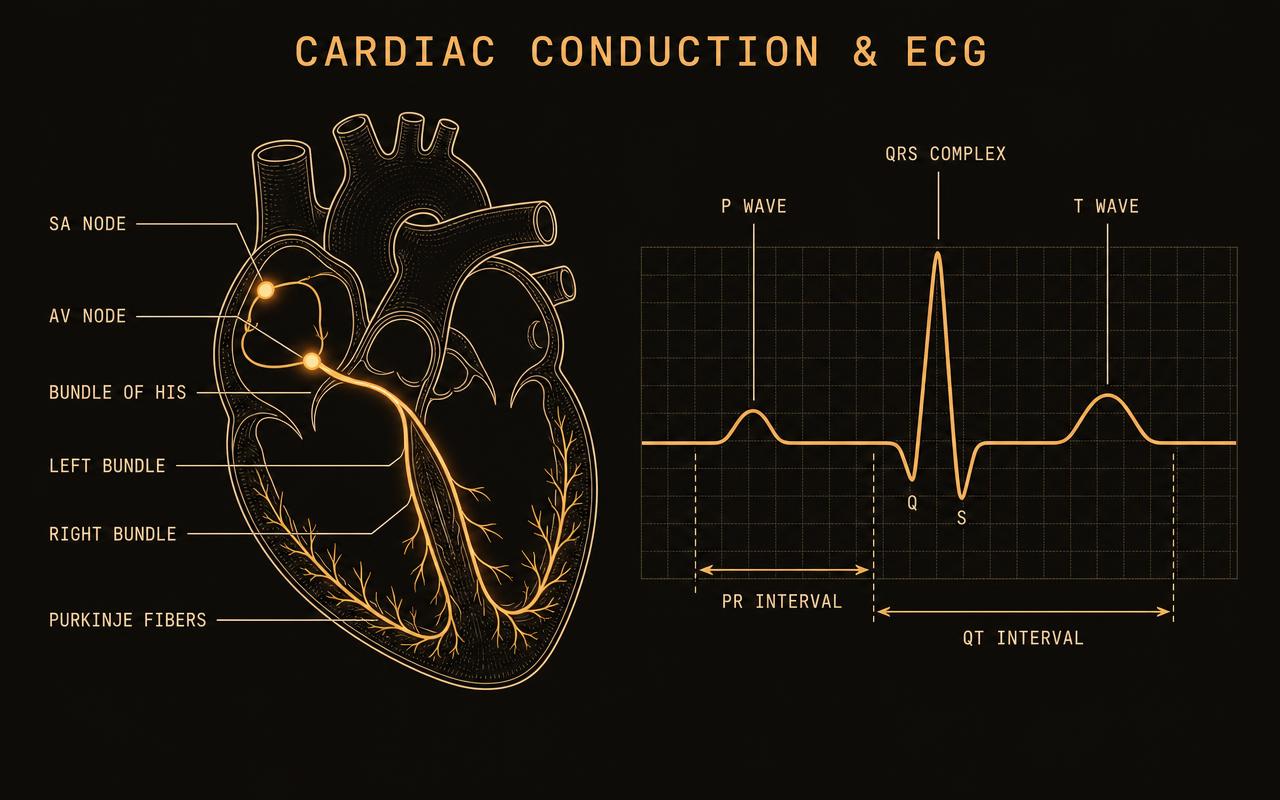
- No discernible P waves with an irregularly irregular rate suggests atrial fibrillation
- A widened QRS means the impulse is bypassing normal conduction
- Peaked T waves point toward hyperkalemia
Pharmacology
Insulin Onset, Peak & Duration
Hypoglycemia risk lives at the peak. Match the peak to the clock and the answer appears.
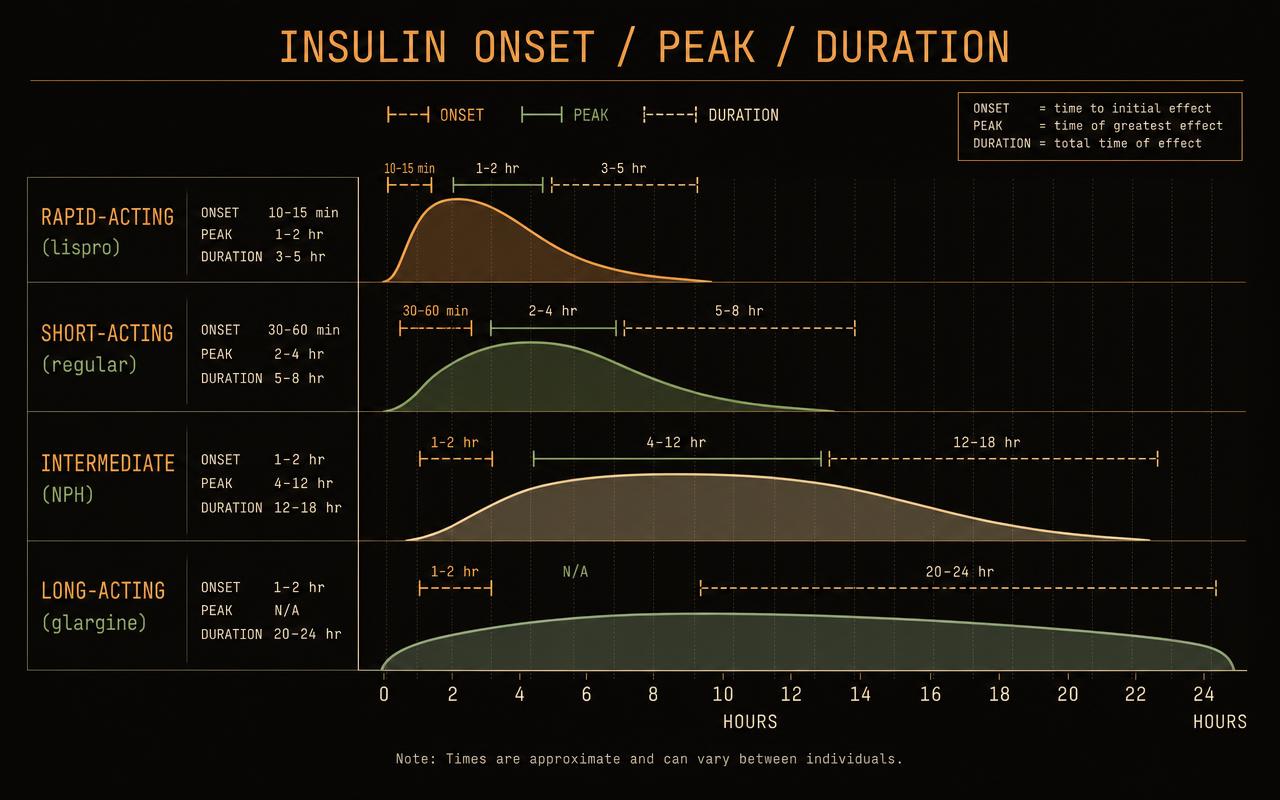
- Rapid-acting peaks at 1 to 2 hours — the meal must already be there
- NPH peaks at 4 to 12 hours, which is why evening doses cause nocturnal hypoglycemia
- Glargine and detemir are essentially peakless and are never mixed in a syringe
Adult Health
ABG Interpretation Decision Tree
Read the pH, then decide whether CO2 or bicarbonate is driving it, then look for compensation.
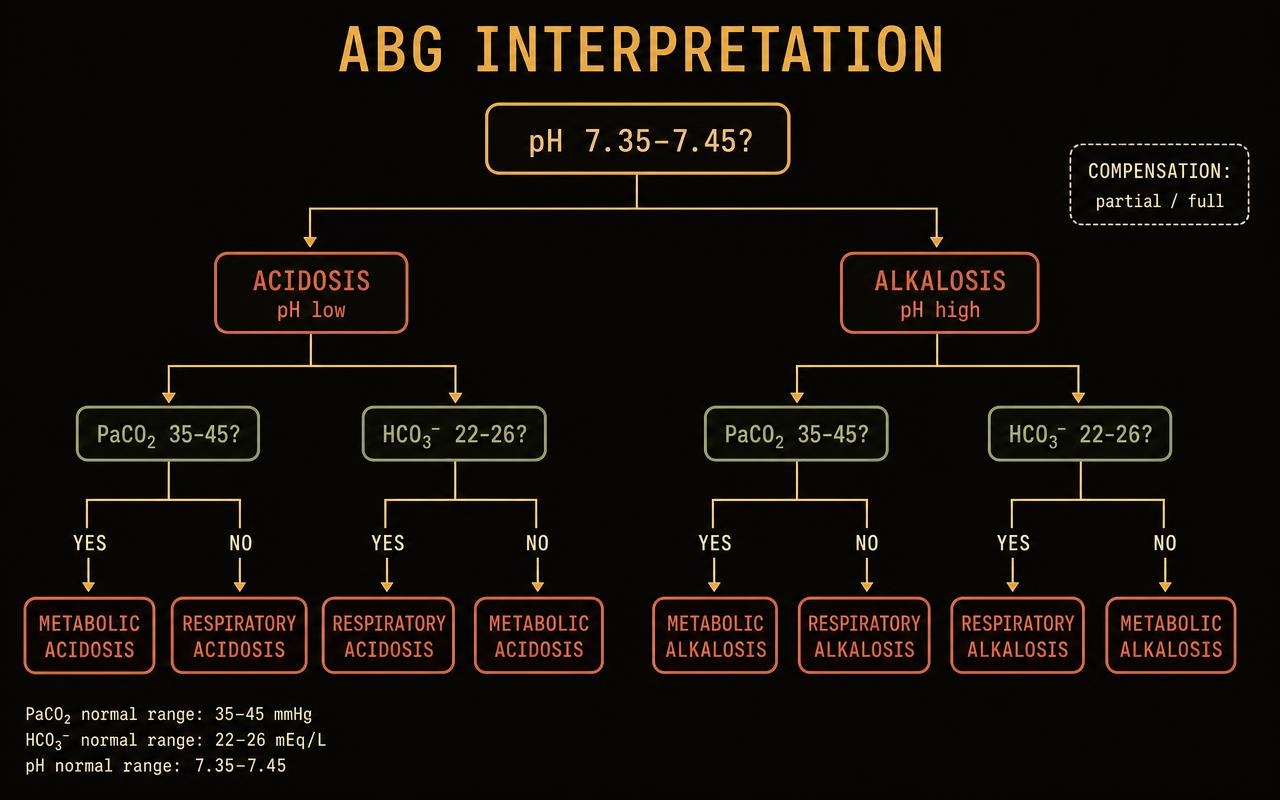
- CO2 moving opposite the pH means respiratory
- Bicarbonate moving with the pH means metabolic
- Compensation shifts the pH toward normal but never past the midline
Adult Health
IV Fluid Tonicity
Water follows solute. Hypotonic swells the cell, hypertonic shrinks it, isotonic stays in the vessel.
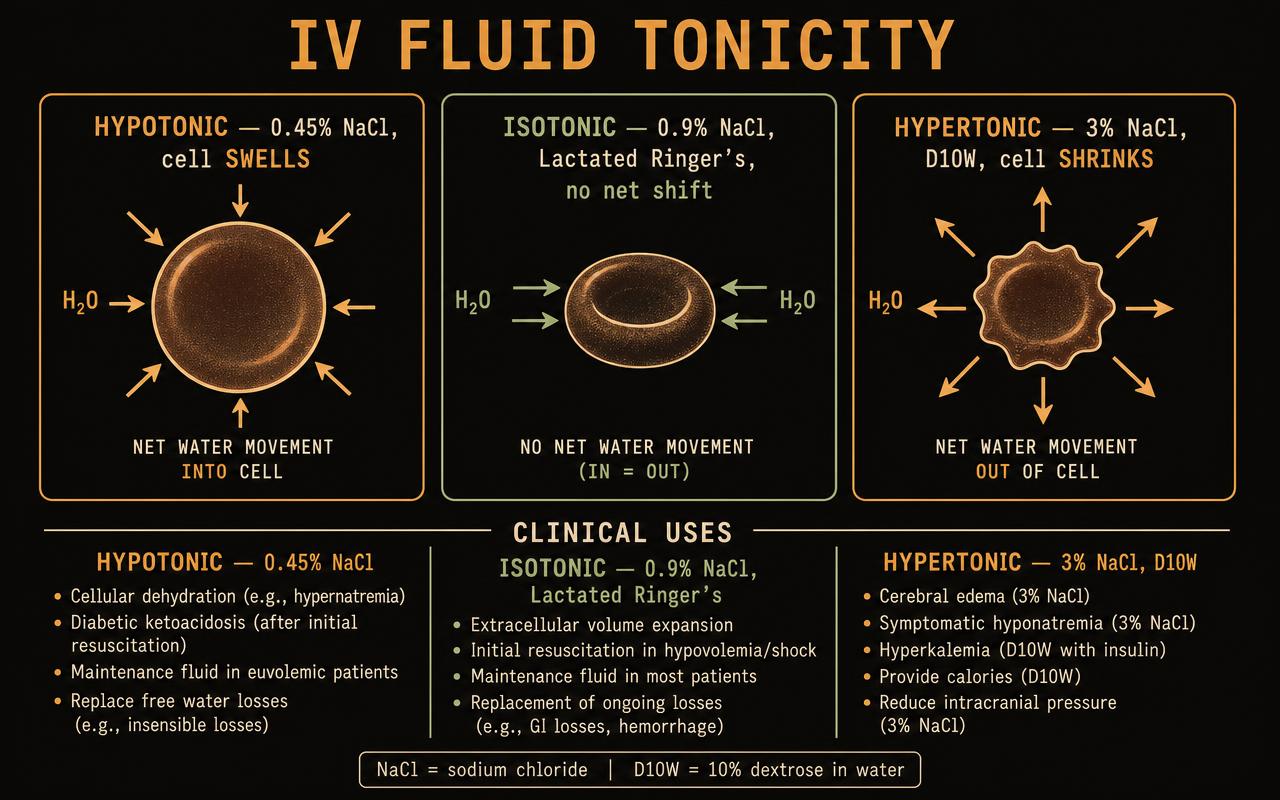
- Isotonic fluid is first line for hypovolemia and hemorrhage
- Hypotonic fluid is contraindicated when cerebral edema is possible
- Hypertonic saline runs slowly, on a pump, with close monitoring